


Recent
Most read


Chief executives and heads in large multi-academy trusts have seenÌýmajor increases in their salaryÌýdespite government attempts to curb top executive pay, according to a new report.Ìý
The Kreston Academies Benchmark report reveals that the average salary for leaders of the largest trusts hasÌýincreased from £115,952 in 2018 to £142,467 last year.
These large pay rises areÌýin marked contrast to the rest of the academies sector with senior leadÌýpay atÌýsmaller trusts remaining stable.
Pay rise: MAT leader gets £33,000 salary boost
DfE:ÌýMATs ordered to explain £150,000 salaries
Restraint: Trust leaders average pay falls in 2018
Warning: More than half of trusts expect to be in deficit by 2022
The Kreston report suggests the restraintÌýshown by large MATs on pay in previous years has been loosened over the past year.
The average salary of heads and chief executives of trusts with between 5,000 and 15,000 pupils in their trustsÌýhas increased by 22 per cent from 2017-18Ìýto 2018-2019.
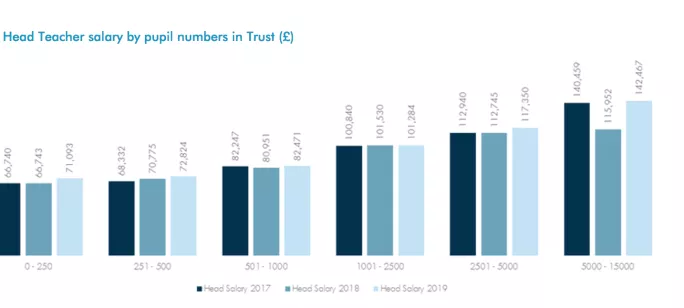
The report said: “Across the categories up to 5,000 pupils, headteachers’ [and CEOs’] salaries have been held or there have been modest increases.
“However, it is in the 5,000 -15,000 pupil category that we have seen the largest increases in salary.
“Last year, we reported that we were aware of a number of trusts where headteachersÌýhad either taken voluntary reductions in pay, or where new headteachersÌýhad come in on lower salaries.
“This year, we have seen some re-alignment of pay whileÌýat the same time Trusts have been mindful of Lord Agnew’s stance on pay levels.â€�
ÌÇÐÄVlog revealed yesterday that one MAT leader had received a pay rise of £33,000 in the last year.
Hugh Greenway, the chief executive of the Elliot Foundation, has seen his salary increase by 19 per centÌýfrom £169,720 to £202,805.
The Kreston report also highlights a very low take-up among MATs for “GAG pooling� - where trusts take all of a schools general grant funding and then redistribute it back to schools.
It reveals that only 10 trusts indicated that they were GAG pooling despite Lord Agnew and the Education, Skills and Funding Agency advocating this. This was up from just three trusts in the Kreston report for 2017-18.
Today’sÌýreport says: “WhileÌýthe trend towards centralisation is clear, GAG pooling is proving harder to establish.
“Historically, very few MATs have adopted this approach, however the level of interest is growing,� its says. “Lord Agnew [the schools minister] and the ESFA continue to advocate this approach, but many MATs face internal political challenges in convincing schools to move to this model, and it can be even harder to convince schools to join MATs if they feel they will lose control of their funds.
“For these reasons, the shift to GAG pooling has been a lot slower than some would have hoped.�
Leora Cruddas, the chief executiveÌýof the Confederation of School Trusts, said “GAG pooling could help some trusts to provide more targeted support for the schools that need it.
“But it may not be the solution for all. Care needs to be taken to ensure it is supported by headteachers, governors and other stakeholders across the trust.�
The report is described as “a financial state of the nation surveyâ€� of more than 360 trusts -Ìýrepresenting nearly 1,500 schools -Ìýand covers the 2018-19 academic year.